%201.svg)
Industry:
Technology:
Federal R&D Credit:
$698,500 Income and Payroll Tax Offset
State R&D Credit:
Total R&D Credits:
AI-Powered Clean Energy Platform Captures $1.2M in Federal & State R&D Credits
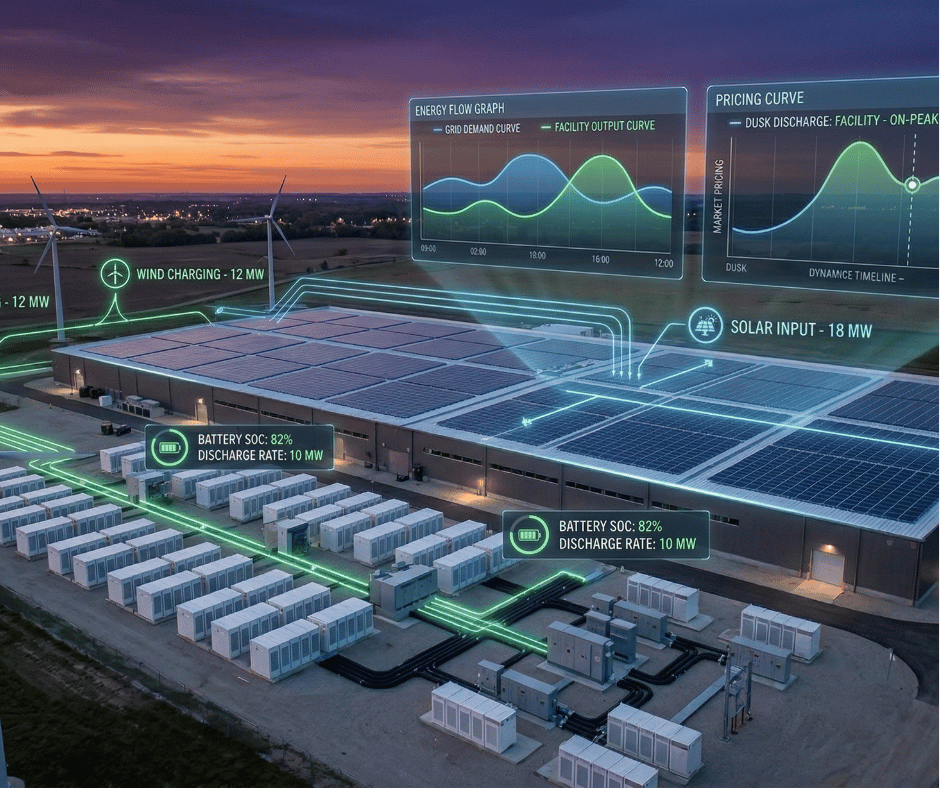
A cutting-edge clean energy software company headquartered in the San Francisco Bay Area has built proprietary artificial intelligence systems that optimize the buying, selling, and storage of renewable energy across major U.S. wholesale electricity markets. The company's platform continuously forecasts energy supply, demand, and pricing in real time enabling commercial and industrial clients to reduce energy costs, achieve carbon-reduction targets, and participate in increasingly complex grid markets with zero manual effort. As the company scaled its R&D activities to improve model accuracy and expand into new energy markets, it engaged TaxTaker to evaluate whether its ongoing engineering and data-science work qualified for the federal and state Research & Development Tax Credit.
The company's core R&D work centered on developing and iteratively refining deep learning forecasting models capable of predicting day-ahead and real-time energy prices across multiple independent system operators. Engineers and data scientists spent significant time experimenting with novel neural network architectures, training pipelines, and optimization algorithms activities that involved substantial technical uncertainty and required systematic testing to achieve commercial-grade performance. TaxTaker's team conducted a thorough technical interview process with the company's engineering leads to document each qualified research activity, map personnel time to specific R&D projects, and identify eligible contract labor and cloud computing expenses.
After a comprehensive review, TaxTaker identified $698,500 in qualifying federal R&D expenditures and $461,200 in eligible state expenditures, resulting in a combined R&D Tax Credit of approximately $1,159,700. These credits directly reduced the company's tax liability, freeing up capital to reinvest in expanding its battery storage optimization capabilities and entering new regional energy markets. The engagement underscored how capital-intensive AI development work even when conducted by software-first companies can qualify for meaningful R&D tax incentives when properly documented.




.svg)


.svg)
